soccer strength training program pdf
Soccer Strength Training Program: A Comprehensive Guide
This guide details a comprehensive soccer strength program‚ incorporating plyometrics and resistance exercises‚ designed for pre-pubertal players over an 8-week period.
It emphasizes injury prevention‚ performance enhancement‚ and addresses the specific needs of soccer athletes‚ including goalkeepers‚ through structured‚ progressive training.
A 12-month plan is also outlined‚ divided into phases aligning with the soccer season‚ and provides a framework for continuous development and adaptation.
Soccer demands a unique blend of athletic qualities: explosive power‚ agility‚ endurance‚ and robust strength. Traditional strength training isn’t always sufficient; a soccer-specific program is crucial for optimal performance and injury resilience. This involves integrating plyometrics – like box jumps and lateral jumps – alongside resistance training to mimic the game’s dynamic movements.
Programs‚ often delivered in two weekly 20-minute sessions before regular soccer practice‚ focus on developing foundational strength in pre-pubertal players. These programs‚ like the FIFA 11+‚ prioritize injury prevention by addressing muscle imbalances and strengthening stabilizer muscles. A comprehensive approach considers the athlete’s maturity status and implements progressive overload principles throughout the year.
The Importance of Strength Training for Soccer Players
Strength training is paramount for soccer players‚ extending beyond simply building muscle mass. It’s a cornerstone of injury prevention‚ mitigating the risk and severity of common soccer injuries stemming from weaknesses and imbalances. Goalkeepers‚ for example‚ require specific strength in legs for powerful kicks and upper body for contesting shots.
Furthermore‚ a well-structured program enhances performance‚ improving explosive movements‚ agility‚ and overall power output. Progressive overload is key‚ gradually increasing the demands on the body to stimulate adaptation. This targeted approach allows players to excel in quick‚ dynamic actions essential for success on the field.
Program Design Principles
Effective soccer strength programs utilize periodization‚ varying intensity and volume‚ and prioritize exercise selection based on individual needs and seasonal demands.
Periodization in Soccer Strength Training
Periodization is crucial for optimizing soccer players’ strength and preventing plateaus. A well-structured program cycles through phases – preparation‚ pre-season‚ in-season‚ and transition – each with specific goals.
The preparatory phase focuses on building a base of general strength‚ while pre-season transitions to soccer-specific power and endurance; In-season maintenance prevents strength loss‚ and the transition phase allows for recovery and regeneration.
This systematic approach ensures peak performance during critical matches and minimizes the risk of overtraining or injury‚ aligning with the demands of the soccer calendar.
Training Frequency and Volume
Optimal training frequency for soccer players typically involves two to three strength sessions per week‚ strategically placed around training and match schedules. Volume‚ measured by sets and repetitions‚ should be progressively increased.
Pre-pubertal players benefit from shorter‚ more frequent sessions – like the 20-minute programs combining plyometrics and resistance exercises – to avoid overstressing developing bodies.
Monitoring athlete fatigue and adjusting volume accordingly is vital. Proper recovery between sessions is paramount‚ ensuring adequate rest and nutrition to maximize adaptation and minimize injury risk.
Exercise Selection: Key Considerations
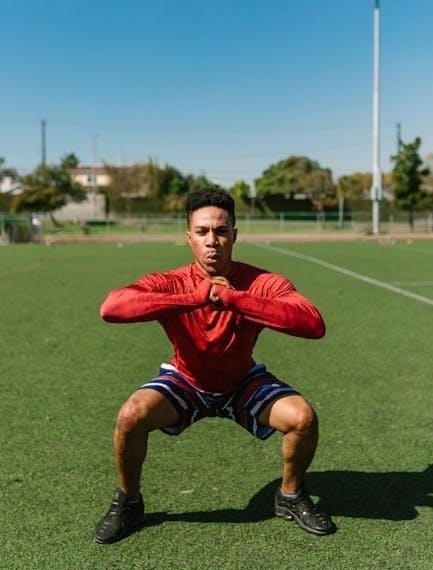
Exercise selection should prioritize movements mirroring the demands of soccer: explosive power‚ agility‚ and core stability. Focus on multi-joint exercises like squats‚ lunges‚ and plyometrics to enhance functional strength.
Goalkeepers require specific attention to upper body strength for battling opponents and leg power for goal kicks.
Prioritize exercises that address common soccer injuries‚ strengthening stabilizer muscles and correcting muscle imbalances. A well-rounded program incorporates lower body‚ upper body‚ and core work‚ ensuring balanced development and injury prevention.
Warm-up and Cool-down Protocols
Prioritize dynamic warm-ups before training to prepare muscles for activity‚ and static stretching post-workout to enhance recovery and flexibility for soccer players.
Dynamic Warm-up for Soccer
A dynamic warm-up is crucial for preparing soccer players for the demands of training and competition. It should focus on movements that mimic the actions performed during a game‚ increasing blood flow and muscle temperature.
Examples include leg swings (forward‚ backward‚ and lateral)‚ arm circles‚ torso twists‚ high knees‚ butt kicks‚ and walking lunges with a twist.
These exercises improve range of motion‚ enhance neuromuscular activation‚ and reduce the risk of injury.
The warm-up should progress gradually‚ starting with low-intensity movements and increasing to higher intensities.
A well-executed dynamic warm-up prepares the body both physically and mentally for optimal performance on the field.
Static Stretching for Recovery
Static stretching plays a vital role in the recovery process following soccer training or matches. Holding each stretch for 20-30 seconds promotes muscle relaxation and improves flexibility.
Focus on major muscle groups used during soccer‚ including hamstrings‚ quadriceps‚ groin‚ calves‚ and hip flexors.
Examples include hamstring stretches‚ quad stretches‚ butterfly stretches‚ and calf stretches.
Static stretching helps reduce muscle soreness‚ improve range of motion‚ and prevent muscle imbalances.
It should be performed gently and without bouncing‚ allowing the muscles to lengthen gradually and enhance overall recovery.
Strength Training Exercises
This section details exercises for lower‚ upper body‚ and core strength‚ crucial for soccer performance and injury prevention‚ utilizing resistance and plyometric methods.
Lower Body Strength Exercises
Developing lower body strength is paramount for soccer players‚ impacting speed‚ power‚ and agility.
Squats and their variations – including front squats and jump squats – build overall leg strength and explosive power‚ essential for powerful kicks and jumps.
Lunges‚ both forward and lateral‚ enhance single-leg stability and strength‚ mimicking the demands of changing direction on the field.
Hamstring curls and related exercises are vital for preventing hamstring injuries‚ a common concern in soccer‚ and improving sprinting mechanics.
These exercises‚ when incorporated into a structured program‚ contribute significantly to a player’s on-field performance and resilience.
Squats and Variations
Squats form the cornerstone of lower body strength development for soccer athletes‚ building foundational power and endurance.
Traditional back squats enhance overall leg strength‚ while front squats place greater emphasis on the quadriceps and core stability‚ crucial for maintaining balance during play.
Jump squats introduce a plyometric element‚ improving explosive power for sprints and jumps.
Variations like goblet squats and Bulgarian split squats further challenge stability and address muscle imbalances.
Progressive overload‚ gradually increasing weight or repetitions‚ is key to maximizing gains and preventing plateaus.
Lunges and Variations
Lunges are essential for developing unilateral leg strength‚ mirroring the single-leg demands of soccer movements like kicking and sprinting.
Forward lunges build foundational strength‚ while reverse lunges emphasize glute activation and hamstring engagement.
Walking lunges enhance dynamic stability and coordination‚ simulating game-like conditions.
Lateral lunges target the adductors and abductors‚ improving side-to-side agility and injury prevention.
Adding weight with dumbbells or a barbell increases the challenge‚ promoting greater strength gains.
Focus on maintaining proper form – a 90-degree angle in both knees – to maximize effectiveness and minimize risk of injury.
Hamstring Curls and Exercises
Strong hamstrings are crucial for soccer players‚ providing power for sprinting‚ protecting the knees‚ and preventing hamstring strains;
Hamstring curls‚ performed on a machine or with resistance bands‚ directly target this muscle group.
Nordic hamstring curls are an advanced exercise‚ building eccentric strength – vital for injury prevention during deceleration.
Glute-ham raises offer a comprehensive hamstring and glute workout‚ enhancing posterior chain power.
Romanian deadlifts (RDLs) also engage the hamstrings‚ improving flexibility and strength simultaneously.
Prioritize controlled movements and a full range of motion to maximize hamstring activation and minimize injury risk during training.
Upper Body Strength Exercises
While soccer is primarily lower-body dominant‚ upper body strength is vital for balance‚ shielding the ball‚ and powerful movements.
Push-ups‚ with variations like incline or decline‚ build chest‚ shoulder‚ and triceps strength‚ enhancing upper body power.
Pull-ups or lat pulldowns develop back and bicep strength‚ crucial for maintaining posture and generating force.
Shoulder presses‚ using dumbbells or a barbell‚ improve shoulder stability and power for tackling and upper body contests.
Rotational exercises with resistance bands enhance core and upper body coordination‚ mimicking in-game movements.
Focus on controlled movements and proper form to maximize effectiveness and prevent injuries during upper body training.
Push-ups and Variations
Push-ups are a foundational exercise for soccer players‚ building upper body strength with minimal equipment.
Standard push-ups target chest‚ shoulders‚ and triceps‚ improving upper body power and endurance.
Incline push-ups‚ performed with hands elevated‚ emphasize the lower chest‚ aiding in shielding and tackling.
Decline push-ups‚ with feet elevated‚ focus on the upper chest and shoulders‚ enhancing shooting power.
Diamond push-ups target the triceps‚ improving arm strength for quick movements and ball control.
Plyometric push-ups‚ involving explosive upward movement‚ develop power and reactivity for dynamic plays.
Prioritize proper form – a straight line from head to heels – to maximize benefits and prevent injuries.
Pull-ups/Lat Pulldowns
Pull-ups and lat pulldowns are crucial for developing upper body pulling strength‚ vital for soccer players’ overall athleticism.
Pull-ups‚ utilizing bodyweight‚ build back and bicep strength‚ improving posture and core stability.
Lat pulldowns‚ using a machine‚ offer a scalable alternative for those unable to perform pull-ups.
These exercises enhance the ability to win aerial duels‚ maintain balance during challenges‚ and generate power in upper body movements.
Focus on controlled movements‚ engaging the back muscles‚ and avoiding momentum.
Variations like wide-grip and close-grip pulldowns target different muscle groups for comprehensive development.
Proper form is essential to prevent shoulder injuries and maximize training effectiveness.
Shoulder Press and Exercises
Developing shoulder strength is paramount for soccer players‚ contributing to powerful passing‚ shooting‚ and maintaining balance during contact.
Shoulder presses‚ utilizing dumbbells or a barbell‚ build strength in the deltoids‚ crucial for overhead movements.
Lateral raises and front raises further isolate the shoulder muscles‚ enhancing stability and range of motion.
Strong shoulders improve the ability to shield the ball‚ withstand challenges‚ and execute precise upper body techniques.
Focus on controlled movements‚ avoiding excessive weight‚ and maintaining proper form.
Rotator cuff exercises are vital for shoulder health‚ preventing injuries and improving long-term performance.
Progressive overload is key to continuous improvement and maximizing strength gains.
Core Strength Exercises
A robust core is foundational for soccer performance‚ enabling efficient power transfer‚ agility‚ and stability.
Plank variations – standard‚ side‚ and with arm/leg lifts – build isometric strength‚ enhancing postural control.
Russian twists‚ utilizing a medicine ball or weight plate‚ develop rotational power crucial for turning and shooting.
Leg raises‚ both hanging and lying‚ target the lower abdominal muscles‚ improving hip flexor strength and stability.
These exercises minimize injury risk by supporting the spine and improving balance during dynamic movements.
Consistent core work enhances on-field performance and overall athletic conditioning.
Focus on maintaining proper form and controlled movements throughout each exercise.
Plank Variations
Plank variations are essential for developing isometric core strength‚ vital for soccer players’ stability and injury prevention.
The standard plank‚ maintaining a straight line from head to heels‚ builds foundational endurance.
Side planks target obliques‚ improving rotational control and lateral stability during cutting movements.
Adding arm lifts challenges shoulder stability while maintaining core engagement‚ mimicking reaching for the ball.
Leg lifts increase difficulty‚ demanding greater core control and hip stability.
Progressions include adding weight or instability (e.g.‚ using a stability ball).
Focus on proper form – avoid hip sagging or arching the back – to maximize effectiveness and minimize risk.
Russian Twists
Russian twists are a dynamic core exercise crucial for developing rotational power‚ essential for soccer-specific movements like shooting and changing direction.
Begin seated with knees bent and feet slightly elevated‚ leaning back to a 45-degree angle.
Hold a weight (medicine ball‚ dumbbell) or maintain hands clasped for increased challenge.
Twist the torso from side to side‚ touching the weight or hands to the ground beside the hips.
Focus on controlled movements‚ engaging the obliques and maintaining a straight back.
Progressions include increasing weight‚ elevating feet higher‚ or adding resistance bands.
Proper form prevents lower back strain; prioritize controlled rotation over speed.
Leg Raises
Leg raises are a foundational core exercise targeting the lower abdominal muscles‚ vital for soccer players’ stability and power transfer during kicking and sprinting.
Lie flat on your back with hands supporting your head or placed under your glutes for stability.
Keep legs straight or slightly bent‚ and slowly raise them towards the ceiling‚ engaging the core.
Control the descent‚ avoiding momentum‚ and lower legs back down without touching the ground.
Variations include hanging leg raises for increased difficulty and resistance band additions.
Focus on maintaining a neutral spine and preventing lower back arching throughout the exercise.
Proper form is key to maximizing effectiveness and minimizing injury risk.
Plyometric Training for Soccer
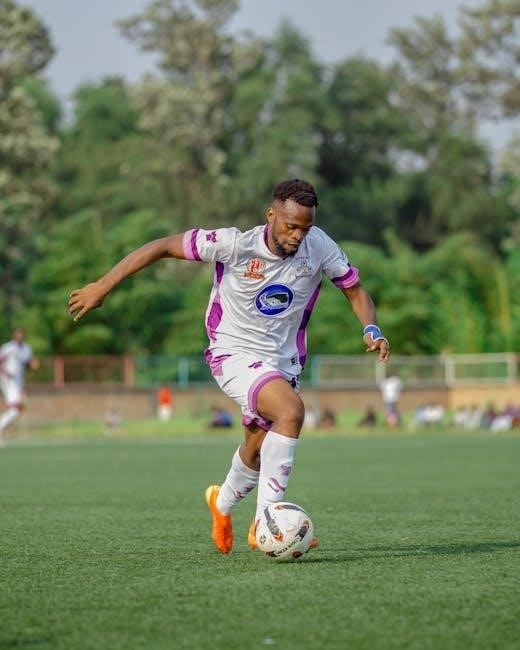
Plyometrics‚ including box jumps‚ lateral jumps‚ and bounding‚ enhance explosive power crucial for soccer‚ improving quickness‚ agility‚ and powerful goal kicks.
Box Jumps
Box jumps are a fundamental plyometric exercise for soccer players‚ developing explosive leg power essential for sprinting‚ jumping‚ and changing direction on the field. Begin with a box height appropriate for your current fitness level‚ ensuring a safe and controlled landing with bent knees.
Focus on driving through the hips and extending the ankles fully during the jump. Progressively increase the box height as strength and technique improve. Incorporate box jumps into your training regimen two times per week‚ alongside other plyometric and resistance exercises‚ for optimal results. Proper form is paramount to prevent injuries.
Remember to prioritize quality over quantity‚ maintaining a controlled and explosive movement throughout each repetition.
Lateral Jumps
Lateral jumps are crucial for soccer players‚ enhancing agility‚ quickness‚ and the ability to change direction rapidly – skills vital for outmaneuvering opponents. These jumps improve lateral power and stability‚ reducing the risk of ankle and knee injuries common in the sport.
Perform lateral jumps over a low cone or line‚ focusing on maintaining a stable base and landing softly. Drive off one leg‚ extending the hip and knee‚ and immediately jump to the other side. Incorporate 2-3 sets of 8-12 repetitions into your plyometric routine.
Prioritize controlled movements and proper landing mechanics to maximize benefits and minimize injury risk.
Bounding Exercises
Bounding exercises are powerful plyometrics that develop explosive leg power‚ essential for sprinting‚ jumping‚ and quick acceleration in soccer. These movements mimic the running motion but with exaggerated force and flight time‚ improving stride length and ground contact time.
Perform single-leg bounds‚ focusing on maximizing horizontal distance with each stride. Maintain a slight forward lean and drive off the ball of your foot. Aim for 3-4 sets of 6-8 bounds per leg‚ prioritizing quality over quantity.
Ensure proper landing mechanics to absorb impact and prevent injuries.
Injury Prevention Strategies
Strengthening stabilizer muscles and addressing muscle imbalances are crucial for injury prevention in soccer‚ reducing the risk of common injuries and weaknesses.
Strengthening Stabilizer Muscles
Stabilizer muscles play a vital role in joint integrity and movement control during the dynamic demands of soccer. Focusing on these often-overlooked muscles is paramount for injury prevention. A comprehensive program should include exercises targeting the hip abductors and external rotators‚ crucial for pelvic stability during running and cutting maneuvers.
Core stabilization exercises‚ like planks and variations‚ are essential for maintaining spinal alignment and transferring power efficiently. Strengthening the muscles around the shoulder girdle enhances upper body stability‚ benefiting goalkeepers and players engaging in physical contests.
Prioritizing these muscles builds a robust foundation‚ minimizing the risk of strains‚ sprains‚ and more severe injuries.
Addressing Muscle Imbalances
Muscle imbalances are common in soccer players due to the sport’s asymmetrical demands‚ increasing injury risk and hindering performance. A thorough assessment is crucial to identify weaknesses and discrepancies between opposing muscle groups.
Common imbalances include hamstring-to-quadriceps ratios and hip flexor tightness impacting glute activation. Targeted exercises‚ like hamstring curls and glute bridges‚ can restore balance.
Prioritizing unilateral exercises – lunges‚ single-leg squats – further addresses imbalances. Corrective strategies‚ including stretching and foam rolling‚ should complement strength training. A balanced musculoskeletal system enhances movement efficiency and reduces the likelihood of injury.
Program Examples & Progression
Detailed examples include an 8-week program for pre-pubertal players and a 12-month comprehensive plan‚ divided into seasonal phases for optimal development.
8-Week Pre-Pubertal Player Program
This program‚ designed for young male soccer players‚ spans eight weeks and consists of two 20-minute sessions weekly‚ integrated before regular soccer training.
It’s a combination of plyometric and resistance exercises‚ carefully structured to promote strength development while considering maturity levels.
The focus is on building a foundational level of strength and power‚ crucial for injury prevention and enhancing on-field performance.
Progression is key; exercises should be modified based on individual player capabilities‚ ensuring proper technique and minimizing risk.
This program serves as an excellent starting point for young athletes to develop essential physical attributes for soccer.
12-Month Comprehensive Training Plan Overview
The 12-month soccer training program is strategically divided into four distinct phases: early pre-season‚ late pre-season‚ in-season‚ and closed/off-season.
Each phase is tailored to address specific physical demands and goals‚ ensuring athletes peak during crucial competition periods.
Early pre-season focuses on building a base of strength and endurance‚ while late pre-season emphasizes power and speed development.
In-season maintenance prioritizes strength preservation and injury prevention‚ and the off-season allows for recovery and regeneration.
This cyclical approach optimizes performance and minimizes the risk of overtraining throughout the entire year.

Monitoring and Evaluation
Regularly track progress through performance metrics and adjust the program accordingly to optimize adaptations and ensure continued gains in strength and fitness.
Tracking Progress and Adjusting the Program
Consistent monitoring is crucial for a successful soccer strength program. Evaluate player performance by tracking key metrics like jump height‚ sprint times‚ and strength gains in exercises such as squats and lunges. Regularly assess for muscle imbalances and weaknesses‚ addressing them with targeted exercises.
Adapt the program based on individual responses and maturity status. If players aren’t progressing‚ consider adjusting exercise volume‚ intensity‚ or selection. Ensure the program remains challenging yet manageable‚ preventing overtraining and maximizing adaptation. Document all adjustments and observations to refine future training cycles‚ fostering continuous improvement and minimizing injury risk.